A1E Oled Specs, Features, and Value: Is it worth the price tag?
Introduction
The A1E OLED launched as one of Sony’s early flagship OLED televisions and remains a frequent reference point when shoppers compare picture quality, industrial design, and sound innovation against both modern OLED rivals and high-end LED/LCD sets. This review examines the A1E’s specifications, core features, and real-world performance across common use cases — home cinema, daytime TV in bright rooms, and gaming — and offers a pragmatic buying guide for readers weighing its price against alternatives.
Quick summary
The A1E is defined by three strengths: class-leading black levels from an OLED panel, a unique Acoustic Surface audio approach that uses the screen as the speaker, and Sony’s image processing aimed at natural color and motion handling. Potential trade-offs are mid-tier peak brightness relative to some high-end LED rivals, streaming-platform limitations as firmware ages, and the usual OLED considerations like burn-in risk for static-channel logos. For many buyers seeking cinematic picture and integrated design, the A1E delivers strong value; for buyers who prioritize raw peak brightness or the latest gaming features, other choices may be preferable.
Key specifications
- Panel: OLED, 4K UHD (3840 × 2160) native resolution
- Sizes available: commonly 55" and 65"
- Processor: Sony image processor (X1 series on contemporary models)
- HDR formats: Support for major HDR workflows (HDR10 and HLG). Dolby Vision support varies by region and firmware; check exact model documentation.
- Refresh rate: Native 100–120Hz class panel (actual supported refresh and HDMI bandwidth depend on model year and firmware)
- Smart platform: Android TV (Google cast, Google Assistant integration available on many units)
- Audio: Acoustic Surface (screen-as-speaker) with actuators and integrated subwoofer; additional audio processing for simulated surround
- Inputs: Multiple HDMI ports with ARC/eARC support on later revisions; optical audio; USB
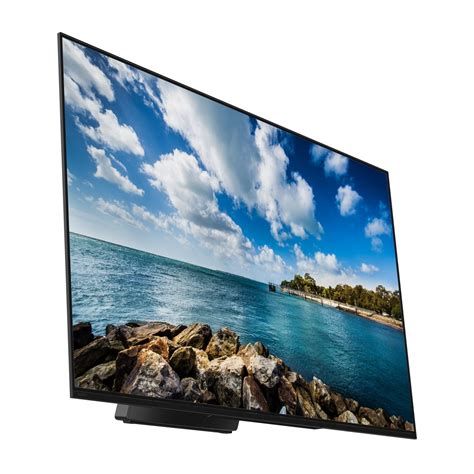
- Design: Very thin screen with minimal bezel, integrated pedestal/stand that raises the panel
Detailed analysis: picture quality
At its core, the A1E’s OLED panel provides the benefits that made OLED the premium choice for cinema-minded buyers: perfect black levels and near-infinite contrast. In dark-room viewing the A1E produces exceptionally deep shadow detail because individual pixels can switch off completely. This yields the dramatic imagery that film lovers value, where highlights feel more dimensional against absolute blacks.
Color reproduction on the A1E leans toward Sony’s preference for natural, consistent skin tones and restrained saturation. Out of the box, it tends to be more color-accurate than many generic presets, though enthusiasts will still benefit from professional calibration. Sony’s processor works to reduce banding and noise in compressed sources, which is useful for streaming services where bitrate and compression artifacts are common.
Motion handling is another strong suit. The TV’s frame interpolation and motion-compensation systems reduce judder on panned shots and improve clarity for sports and action. That said, some cinephiles dislike interpolation artifacts and will prefer disabling motion smoothing for movie playback; the A1E’s menus allow for this flexibility.
Peak brightness is the typical OLED compromise: excellent for most indoor scenes and HDR content with bright highlights, but not as luminous as the brightest high-end LED/LCD (often marketed as “QLED” or high-end VA panels). In very bright rooms or for viewers who want extremely punchy HDR highlights, a high-end LED/LCD may preserve specular highlights better. For controlled lighting and home-theater environments, however, the A1E’s contrast advantage usually outweighs lower peak numbers.
Detailed analysis: sound and industrial design
One of the headline innovations on the A1E is Sony’s Acoustic Surface audio system, where actuators mounted to the back of the panel cause the screen itself to act as a speaker. The practical effect is a tighter audio–video alignment: voices and on-screen sound appear to come from the image rather than a speaker array below or behind the panel. For dialogue-driven content and many cinematic scenes this creates an immersive impression without needing a large soundbar.
That said, Acoustic Surface cannot replace a dedicated multi-driver sound system for viewers seeking deep, authoritative bass or robust surround performance for large living rooms. The integrated design benefits casual listeners and those who prize minimalist setups, but audiophiles will still prefer an external soundbar or AV receiver and separate speakers for critical listening or very large rooms.
Looking for the best TVs & Home Theater deals on Amazon?
View Offers →Design-wise, the A1E’s profile is extremely thin, with a sculpted back and a stand that elevates the panel to allow the screen to “float.” This results in a premium aesthetic that integrates well into modern living spaces where the TV is essentially furniture. Build quality and finish are consistently high, reflecting Sony’s flagship approach.
Real-world use cases
Home theater (dark room)
In a dedicated living room or home theater with controllable lighting, the A1E excels. Movies encoded in HDR look cinematic, with strong shadow detail and accurate color. For viewers who prioritize film-like reproduction and deep blacks, the A1E is a clear winner.
Living room with mixed lighting
For mixed-light environments (windows, daylight), the A1E performs well at moderate brightness levels. However, buyers who regularly watch in full daylight or want a TV that competes with high ambient light may find brighter LED/LCD models better at combating glare and preserving punchy highlights.
Gaming
Casual and console gamers will find the A1E offers a very engaging experience due to its perfect blacks, excellent color, and low-to-moderate input lag for typical living-room gaming. Competitive gamers who require the absolute lowest latency, fastest response, and advanced gaming features (like variable refresh rate at high frame rates, very high HDMI bandwidth) should check specific model-year gaming specs and might prefer newer OLEDs or gaming-focused displays optimized for those features.
Sports and fast-paced TV
Motion processing helps with sports and fast camera pans, so viewers who watch a lot of live sports get clearer motion than older non-OLED designs. Some users will prefer to tweak motion settings to avoid soap-opera effects, but the A1E gives plenty of options.
Pros & Cons
- Pros
- Extraordinarily deep black levels and contrast from the OLED panel
- Acoustic Surface technology produces convincing lip-synced audio without a separate speaker array
- Natural color rendition and strong out-of-the-box accuracy for movies
- Sleek, premium industrial design with a slim profile
- Good motion handling for sports and action
- Cons
- Peak brightness is lower than the brightest LED/LCD rivals, which can reduce HDR “pop” in very bright rooms
- Integrated audio is innovative but not a substitute for a dedicated home theater speaker system
- Potential for software/streaming platform aging over time depending on firmware updates
- OLED-specific risks (image retention/burn-in) if static content is displayed for long periods without mitigation
Comparison table
| Feature | A1E OLED | Typical High-end LED/LCD | Other OLED Competitor |
|---|---|---|---|
| Panel Type | OLED (self-emissive) | LED/LCD with local dimming | OLED (self-emissive) |
| Contrast / Black Levels | Near-perfect blacks | High with local dimming, but blooming possible | Near-perfect blacks |
| Peak Brightness (HDR) | Moderate — very good for most rooms | High — excels in bright rooms | Moderate to high depending on model |
| Audio | Acoustic Surface (screen-as-speaker) | Down-firing / front-firing speakers; often weaker | Varies; some use front-firing soundbars |
| Smart Platform | Android TV (Google features) | Varies (Tizen, WebOS, Roku) | Varies by brand |
| Ideal Use | Home cinema, movies, mixed gaming | Bright-room general-purpose viewing, sports | Home cinema, movies, some gaming-focused models |
| Price / Value | Premium; strong value if prioritizing picture | Wide range; can be competitive at same price | Comparable premium pricing; varies by features |
Practical considerations before buying
When considering an A1E purchase, buyers should weigh a few practical points beyond specs. These are the questions that typically shape real-world satisfaction:
- Room lighting: How bright is the viewing environment? For dark-room cinema, OLED's contrast pays dividends. For rooms with lots of daylight and glare, consider higher-brightness LED models or plan for light control (curtains, dimmers).
- Primary content: Does the household watch movies and streaming dramas, or are there many daytime news channels with static logos? Heavy static content increases the need to use pixel-shifting features and varied content to reduce burn-in risk.
- Gaming needs: Which consoles or PCs will be used? For casual console gaming, the A1E is more than adequate. For competitive gamers who want ultimate low-latency modes, variable refresh rate (VRR), and the latest HDMI 2.1 bandwidth, verify the exact model-year input and firmware support before deciding.
- Audio expectations: Is the intent to rely on TV speakers or to connect an external sound system? Acoustic Surface gives more immersive TV sound than typical thin-speaker arrays, but for booming bass and full surround, plan for a separate sound solution.
- Software longevity: Smart platforms age. Buyers focused on long-term platform updates should confirm manufacturer update policies and whether the ecosystem supports major streaming apps now and in the future.
- Calibration: Buyers aiming for reference-level color should budget for calibration (either DIY with calibration discs and patterns or a professional calibrator).
Buying guide: how to decide if the A1E is the right buy
This guide helps readers match the A1E’s strengths to common buyer profiles and budgets.
Buyer profile: dedicated movie watcher
If the primary goal is a cinematic experience — deep blacks, accurate color, and an immersive picture for movies and TV dramas — the A1E is an excellent choice. Prioritize an OLED when the viewing room can be dimmed and when the household values film-like reproduction.
Discover deals on TVs & Home Theater — updated daily.
Shop Amazon →Buyer profile: mixed-use living room
For households with mixed content (sports, daytime TV, movies) and variable lighting, the A1E still performs well but buyers should consider whether they need higher peak brightness for daytime viewing. If the living room features uncontrolled sunlight and bright reflections, compare LED/LCD alternatives with higher advertised peak nits.
Buyer profile: gamer
Console gamers who enjoy story-driven single-player titles will appreciate the A1E’s visual fidelity. Competitive gamers should verify that the specific A1E model supports the low-latency modes and refresh-rate features they require; if not, a more gaming-focused model might be better.
Buyer profile: minimalist with integrated audio preference
For buyers who dislike the clutter of a separate soundbar and want better lip-synced audio without extra equipment, Acoustic Surface is attractive. It offers an elegant single-piece setup that improves dialogue localization, though those wanting deep bass will still want a subwoofer or soundbar addition.
Maintenance and long-term ownership tips
- Protect against burn-in: Use automatic screen-savers, enable pixel-shift features if available, avoid leaving static channel logos or HUDs on for many hours, and vary content source.
- Update firmware: Keep the TV’s firmware and app software current to preserve security, app compatibility, and occasionally feature updates.
- Calibration checks: If picture quality is mission-critical, periodically re-check calibration after firmware updates which can sometimes alter color and gamma behavior.
- Connectivity housekeeping: Use high-quality HDMI cables and pigtail adapters for sound systems; verify ARC/eARC settings if connecting to an AV receiver.
Value: is it worth the price tag?
Value assessment depends on buyer priorities. The A1E tends to command a premium because it couples an OLED panel’s intrinsic picture quality with Sony’s image processing and the Acoustic Surface audio concept. For buyers whose primary concern is cinematic picture quality and who appreciate refined industrial design, the premium is justified. The A1E’s price is less compelling for buyers who spend most viewing hours in brightly lit rooms or who need the latest gaming-specific features.
Another aspect of value is longevity: OLED technology combined with a well-built chassis and software that continues to receive updates can provide many years of excellent performance. However, because platform and feature expectations evolve rapidly, buyers should account for the smart-TV lifecycle and potential feature gaps over time.
Conclusion
The A1E OLED is a distinctive offering for viewers who put picture fidelity and elegant design at the top of their shopping list. Its deep blacks, accurate colors, and unique Acoustic Surface audio make for a compelling, integrated home theater experience. Buyers who demand the brightest possible HDR highlights or the newest high-frame-rate gaming features should compare the A1E against the latest LED/LCD and OLED competitors to ensure their needs are met. For many cinephiles and design-conscious owners, however, the A1E represents a sensible premium — a TV that emphasizes cinematic realism and minimalist integration rather than headline brightness numbers. Ultimately, whether it is “worth the price” depends on the environment in which it will be used and the features the buyer values most.